SideLines, September 2006
Actually, a spam attack on our forums has forced us to require that all forum contributors register.
So you may - and you must - register to post messages and replies in the Co-op forums. Registering is not difficult and is still free (use the Registration link in the main menu, near the top).
Reading and using information from the forums is completely open to everyone. Our aim has always been to communicate offers and requests - for language services, for research - as openly and widely as possible.
To express any opinion about this matter, please use our Viewpoints column (see the website), or contact Peter, c/o The Research Cooperative (NZ): pjm (at) gol (dot) com). Thank you!
Thursday, August 31, 2006

Tuesday, August 01, 2006
Kids may miss the wood of science....
 SideLines, August 2006
Kids may miss the wood of science if they are only shown the trees of maths, physics and chemistry.
The Asahi Newspaper of Japan recently ran the following headline in their English edition: "Firms take roadshows to schools to prove science is fun: Companies fear falling interest in science and math will leave them short-staffed in global rivalries" (July 2006).
Here is a list of all the companies and industries mentioned in the article, from first to last: Kyowa Hakko Kogyo Co. (pharmaceutical & biochemical manufacturing), Biofrontier Laboratories (biotechnology), Bayer Japan Ltd (medicines), NEC Corp (electronics), Matsushita Electric Industrial Co. (electronics), IBM Japan Ltd (computers). The Japan Chemical Industries Association is sponsoring chemistry competitions in Japan.
How depressing! Young students should be introduced to the full universe of natural, social and physical sciences... through everyday opportunies in school and outside school. They need chances to learn from parents and teachers, in settings that encourage an organic and gradual development of scientific understanding.
Putting just a few selected school kids into pressure cookers designed for specific areas of science will fail to catch the interest of many potential thinkers.
All students - regardless of their apparent academic level - deserve opportunites to discover and follow their own personal scientific interests. This can be done by putting science into the curricula of all subjects taught in schools.
Give art students oportunities to learn about the chemistry of pigments, and give science students art lessons to teach them some tricks of observation.
Encourage students to test their abilities and stretch their imaginations, in any field, and of all kinds of science will naturally follow.
To express any opinion about this matter, please use our Viewpoints column (link above) or contact Peter, c/o The Research Cooperative (NZ): pjm (at) gol (dot) com).
Monday, July 03, 2006
The literary heritage of science
 SideLines, July 2006
 William Rees-Mogg (Yomiuri Shimbun, 2nd July 2006) boldly declares that the 'United Scholars" of England are fighting back to raise support for museums, libraries and archives for the preservation of books and literary heritage.
He notes that although the English language is England's largest and most sucessful export, there is still a need to defend the preservation of important book collections that illustrate England's literary and scientific heritage (including for example, the Macclesfield Library of Scientific Books).
If the UK with all its experience and wealth cannot properly preserve its scientific heritage, what can other nations do?!
How well preserved is scientific heritage in India, China, Japan, or - perhaps more importantly - in countries that are only just beginning to develop their own modern scientific history?
Scientific writers in the past can help educate writers of the present and future... not just through the record of results but also through the play of ideas over time. Good scientific writing can be a pleasure to read even if the information is obsolete, and even the worst writing can become valuable - as an illustration of how not to write.
To express any opinion about this matter, please use the comments link below, or contact Peter, c/o The Research Cooperative (NZ): pjm (at) gol (dot) com.
Photo: an ornamental banana in Thailand, June 2006 (PJM). While bananas are best known as fruit plants, banana plants can have many different uses, depending on species and variety. Some kinds of banana have been used as fibre sources for cloth or paper.
Monday, June 12, 2006
Back up and write on
SideLines, June 2006
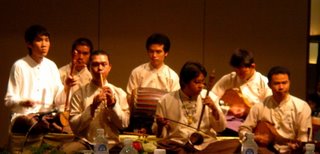 Musicians encourage the speakers at the start of a research conference in Chiang Mai, Thailand, in June.
How many individual scientists, research facilities and universities have all their computer records (digital archives) backed up at a distant mirror site?
It may seem an obvious and feasible requirement among wealthy universities in wealthy countries, but in many parts of the world, there is probably very little real security for records that are stored at one physical location, even if there are multiple copies at that location.
Most active writers are keenly aware of the need to back up manuscript files frequently, and at more than one location. One benefit of sending out drafts for review is that the circulating copies can serve as distant back-up copies if disaster strikes (disk failure, theft, fire etc.).
Getting an almost-finished paper safely to an editor or other person should allow the writer to sleep more easily - and there is nothing better than a good sleep to discover that a paper has major holes and needs drastic repairs.
For any enquiries about this site, please contact Peter, c/o The Research Cooperative (NZ): pjm (at) gol (dot) com).
 Musicians encourage the speakers at the start of a research conference in Chiang Mai, Thailand, in June.
How many individual scientists, research facilities and universities have all their computer records (digital archives) backed up at a distant mirror site?
It may seem an obvious and feasible requirement among wealthy universities in wealthy countries, but in many parts of the world, there is probably very little real security for records that are stored at one physical location, even if there are multiple copies at that location.
Most active writers are keenly aware of the need to back up manuscript files frequently, and at more than one location. One benefit of sending out drafts for review is that the circulating copies can serve as distant back-up copies if disaster strikes (disk failure, theft, fire etc.).
Getting an almost-finished paper safely to an editor or other person should allow the writer to sleep more easily - and there is nothing better than a good sleep to discover that a paper has major holes and needs drastic repairs.
For any enquiries about this site, please contact Peter, c/o The Research Cooperative (NZ): pjm (at) gol (dot) com).
Tuesday, May 02, 2006
Synchronicity
SideLines, May 2006
Consider the following stories.
"Liberal economist Galbraith dies at 97... In 1999, a panel of judges... picked "The Affluent Society" [for] its list of the century's best English-language works of nonfiction.... Galbraith's prose won admiration at the very top"
and then, in the same issue of The Japan Times (1st May, 2006)
"Professor plagiarized overseas paper... A Nihon University accountant has plagiarized ideas from a ...research paper published... in the 1950s, a university official said Saturday... The professor, who has authoured numerous books on accounting and bookkeeping, has declined to reply to an enquiry...".
 Co-op comment: The contrast is sad, and makes Japanese research look pitiful, but think again - the entire world is plagued with plagiarism!
See:
"The so-called 'secret spy dossier' published last week by the [British] Government as a crucial plank in the argument for... war [against Iraq] was largely cribbed from an American postgraduate's doctoral thesis - grammatical mistakes and all... There are scornful mutterings in French political circles... that they cannot be expected to back a war on Iraq until Britain produces something more compelling than a 'failed doctoral thesis' (02.09.03 Guardian)
Co-op comments: So even a failed thesis can become famous - but isn't it better to do good research and writing, even if it does not attract fame?
Opportunities for plagiarism may seem too great to ignore, for some - but the opportunities to detect plagiarism must be even greater, since there are more readers in the world than writers - and detecting plagiarism is another way to become famous (if becoming famous is important).
Please contact Peter, c/o The Research Cooperative (NZ): pjm (at) gol (dot) com).
Consider the following stories.
"Liberal economist Galbraith dies at 97... In 1999, a panel of judges... picked "The Affluent Society" [for] its list of the century's best English-language works of nonfiction.... Galbraith's prose won admiration at the very top"
and then, in the same issue of The Japan Times (1st May, 2006)
"Professor plagiarized overseas paper... A Nihon University accountant has plagiarized ideas from a ...research paper published... in the 1950s, a university official said Saturday... The professor, who has authoured numerous books on accounting and bookkeeping, has declined to reply to an enquiry...".
 Co-op comment: The contrast is sad, and makes Japanese research look pitiful, but think again - the entire world is plagued with plagiarism!
 See:
"The so-called 'secret spy dossier' published last week by the [British] Government as a crucial plank in the argument for... war [against Iraq] was largely cribbed from an American postgraduate's doctoral thesis - grammatical mistakes and all... There are scornful mutterings in French political circles... that they cannot be expected to back a war on Iraq until Britain produces something more compelling than a 'failed doctoral thesis' (02.09.03 Guardian)
Co-op comments: So even a failed thesis can become famous - but isn't it better to do good research and writing, even if it does not attract fame?
Opportunities for plagiarism may seem too great to ignore, for some - but the opportunities to detect plagiarism must be even greater, since there are more readers in the world than writers - and detecting plagiarism is another way to become famous (if becoming famous is important).
Please contact Peter, c/o The Research Cooperative (NZ): pjm (at) gol (dot) com).
Saturday, April 01, 2006
Kiwi academic in China

SideLines, April 2006
The North Shore Times, a local newspaper in Auckland, New Zealand, reported (29th Dec 2005) the travails of Mr David Speary, a North Shore academic and writer who has been teaching at the Huangang Teachers College in Hubei Province, China.
Here are some key points:
"China has a very strict grading for tertiary institutes, and Huangang Teachers/Normal College is only a third grade one. However, apparently it has the largest number of students learning English in any tertiary educational institute in China. Thirty percent of the 10,000 teachers in training are English majors..."
Many of his students do not want to be teachers but have their eyes on a career in business. The financial rewards for bilingual workers are supposed to be better.
Co-op comment: Presumably, the business world offers a similar lure to bilingual scientists and research students.
Maybe language services for researchers and research organisations have also become an important business area in China. Do many companies in China focus specifically on academic customers?
Can any of our readers offer ideas or information about this?
Please contact Peter, c/o The Research Cooperative (NZ): pjm (at) gol (dot) com).
Tuesday, March 07, 2006
Machine Translation
SideLines, March 2006
In the March 2006 issue of Scientific American (pp. 70-73), Gary Stix has reviewed the history of machine translation and recent attempts by varous online services to use statistical methods and rule-based systems to translate between many different languages. Kevin Hendzel, a spokesman for the American Translators Asssociation is quoted on the subject. He does not seem overly concerned with the competition...
As an instant test, and for the amusement of our readers, we have submitted the phrase
"Machine Translation"
to a rule-based Google/Systran translation from English to Portugese and from Portugese back to English.
Here is the result:
"Translation De Máquina"
Perhaps the real value of machine translation in the future will be the creation a universal hybrid language (??)
Contact The Research Cooperative (NZ): info (at) researchco-op (dot) co.nz )
In the March 2006 issue of Scientific American (pp. 70-73), Gary Stix has reviewed the history of machine translation and recent attempts by varous online services to use statistical methods and rule-based systems to translate between many different languages. Kevin Hendzel, a spokesman for the American Translators Asssociation is quoted on the subject. He does not seem overly concerned with the competition...
As an instant test, and for the amusement of our readers, we have submitted the phrase
"Machine Translation"
to a rule-based Google/Systran translation from English to Portugese and from Portugese back to English.
Here is the result:
"Translation De Máquina"
Perhaps the real value of machine translation in the future will be the creation a universal hybrid language (??)
Contact The Research Cooperative (NZ): info (at) researchco-op (dot) co.nz )
Absurdly popular catch-phrases?
Recently, at our main website (The Research Cooperative NZ), three recent postings have been attracting unusually large number of visitors.
Is this an absurdity, some kind of scam, or simply the result of using good catch-phrases?
Our Co-op member has used phrases that clearly identify the services offered, as follows:
1. English-Chinese translation (464 visits in one month)
2. English editing (302 visits in one month)
3. English proofreading (192 visits in one month)
As a rough test of why these offers have attracted attention, I present results (hit numbers) for the following exact search phrases, using Google:
First set
English-Chinese translation - 52,600
English-Chinese - 2,160,000
English to Chinese translation - 138,000
English to Chinese - 1,900,000
Chinese-English translation -- 66,300
Chinese-English - 2,700,000
English-Mandarin - 228,000
English-Cantonese - 158,000
English-German translation - 1,250,000
English-German - 10,500,000
English-Spanish translation - 194,000
English-Spanish - 12,700,000
Maybe more people (especially English readers) are seeking translation from Chinese into English than from English into Chinese - and maybe it is better for translators and writers to avoid being very specific about which Chinese language they are working with, when designing a catch phrase, unless they are working with Cantonese (which I guess has a smaller speech community than Mandarin).
Also, there is more English-language communication about translation between European languages, than between English and Chinese, which is not surprising. It would be of interest to have comparable figures for Chinese-language areas of the Internet.
Second set
English editing - 55,200
Chinese editing - 809
i.e. Not many English readers seek to write in Chinese.
Third set
English proofreading - 25,100
Chinese proofreading - 305
i.e. Not many English readers seek editors of Chinese.
Comments? Please tell us - what do you think these numbers mean?
Is this an absurdity, some kind of scam, or simply the result of using good catch-phrases?
Our Co-op member has used phrases that clearly identify the services offered, as follows:
1. English-Chinese translation (464 visits in one month)
2. English editing (302 visits in one month)
3. English proofreading (192 visits in one month)
As a rough test of why these offers have attracted attention, I present results (hit numbers) for the following exact search phrases, using Google:
First set
English-Chinese translation - 52,600
English-Chinese - 2,160,000
English to Chinese translation - 138,000
English to Chinese - 1,900,000
Chinese-English translation -- 66,300
Chinese-English - 2,700,000
English-Mandarin - 228,000
English-Cantonese - 158,000
English-German translation - 1,250,000
English-German - 10,500,000
English-Spanish translation - 194,000
English-Spanish - 12,700,000
Maybe more people (especially English readers) are seeking translation from Chinese into English than from English into Chinese - and maybe it is better for translators and writers to avoid being very specific about which Chinese language they are working with, when designing a catch phrase, unless they are working with Cantonese (which I guess has a smaller speech community than Mandarin).
Also, there is more English-language communication about translation between European languages, than between English and Chinese, which is not surprising. It would be of interest to have comparable figures for Chinese-language areas of the Internet.
Second set
English editing - 55,200
Chinese editing - 809
i.e. Not many English readers seek to write in Chinese.
Third set
English proofreading - 25,100
Chinese proofreading - 305
i.e. Not many English readers seek editors of Chinese.
Comments? Please tell us - what do you think these numbers mean?
Tuesday, February 28, 2006
Comments on the Origins of Science, Art, and Writing
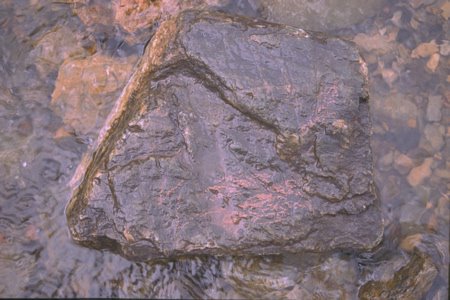
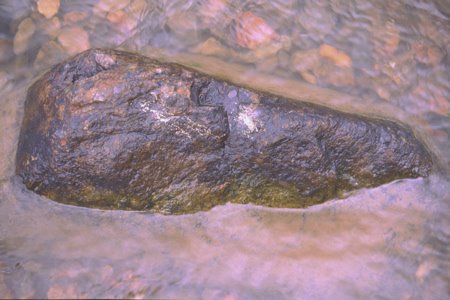
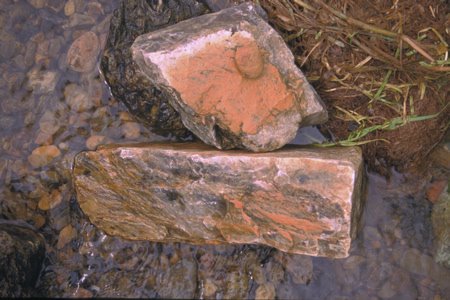
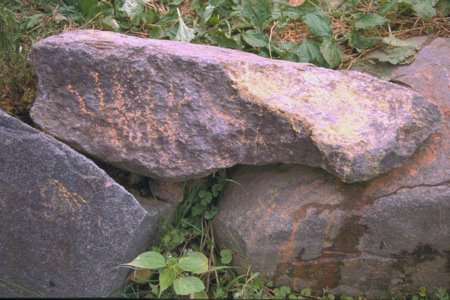
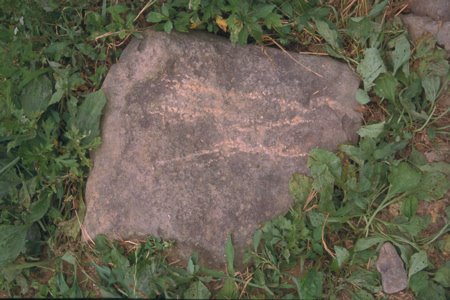
 The following images are from a summer camp in Kyoto, Japan, in 2005. Children began imitating an adult who was grinding and smoothing pebbles on boulders, and then began imitating each-other. The children discovered different colours using different stones, and left their markings on the boulders.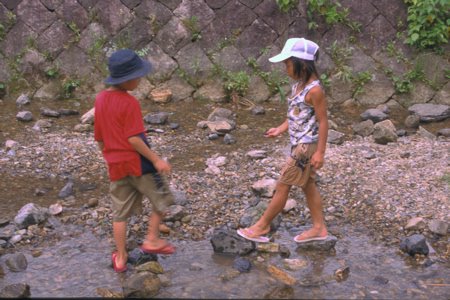
The markings seem to be natural answers to unspoken questions, and signs of science beginning. Is this Art? Is this Writing?
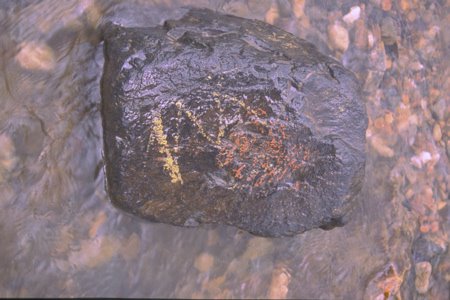
Is this Humanity in Nature (In a Concrete Ditch)?!
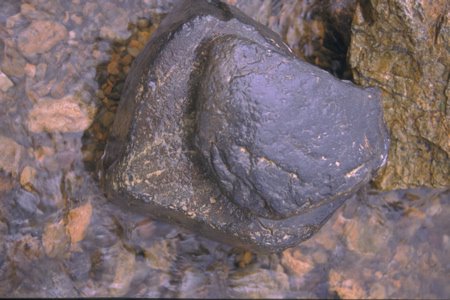
With thanks to all the children!


Sunday, February 05, 2006
24 trillion yen
SideLines, February 2006
 That's the five-year spending target announced last week by Japan's General Council on Science and Technology.
The Japan Times of Thursday, Feb. 2, ran a good editorial on the plan, noting that women are greatly underrepresented in the sciences in Japan. According to the new plan, 25 % of newly hired researchers should be women.
Where will they come from?!
Policy suggestions from the Cooperative: spend more on improving scientific writing and publication in Japan, and create courses and job opportunites for professional technicians, so that graduate students and researchers can do their research more effectively.
Subscribe to our electronic newsletter for occasional reports from the Cooperative.
Contact Peter, c/o The Research Cooperative (NZ): pjm (at) gol (dot) com).
 That's the five-year spending target announced last week by Japan's General Council on Science and Technology.
The Japan Times of Thursday, Feb. 2, ran a good editorial on the plan, noting that women are greatly underrepresented in the sciences in Japan. According to the new plan, 25 % of newly hired researchers should be women.
Where will they come from?!
Policy suggestions from the Cooperative: spend more on improving scientific writing and publication in Japan, and create courses and job opportunites for professional technicians, so that graduate students and researchers can do their research more effectively.
Subscribe to our electronic newsletter for occasional reports from the Cooperative.
Contact Peter, c/o The Research Cooperative (NZ): pjm (at) gol (dot) com).
Monday, January 23, 2006
The Find-it Page, Japan Times
Incredibly, it is possible in Japan to advertise the Research Cooperative at no cost nationally, in a major English language daily (The Japan Times).
The following ad (26 words) was submitted as a free ad under Service, in The Find-it Page, on 23. Jan. 2006:
Research Co-operative (www.researchco-op.co.nz), an online meeting place for research writers, editors, translators, and others. Offers and requests for volunteer and paid services. All languages and subjects.
The email address for submission is weekendscene [at] japantimes.co.jp, and the subject line required is "The Find-it Page".
(Publication is on Saturday; deadline is Friday, 5 pm).
Note: This message has been posted to provide a record of promotion activities at The Research Cooperative. In this way, users of Co-op services can see we that we view promotion as a major task of our Co-op administration. It is also a task for which we always require help (volunteer, and financial).
If you can help us help others (and you), please contact Peter (email - pjm at gol dot com.
The following ad (26 words) was submitted as a free ad under Service, in The Find-it Page, on 23. Jan. 2006:
Research Co-operative (www.researchco-op.co.nz), an online meeting place for research writers, editors, translators, and others. Offers and requests for volunteer and paid services. All languages and subjects.
The email address for submission is weekendscene [at] japantimes.co.jp, and the subject line required is "The Find-it Page".
(Publication is on Saturday; deadline is Friday, 5 pm).
Note: This message has been posted to provide a record of promotion activities at The Research Cooperative. In this way, users of Co-op services can see we that we view promotion as a major task of our Co-op administration. It is also a task for which we always require help (volunteer, and financial).
If you can help us help others (and you), please contact Peter (email - pjm at gol dot com.
Wednesday, January 18, 2006
Newsletter created
SideLines, January 2006
'Back-to-Back', an electronic newsletter, has been created for the Research Cooperative. Please subscribe here
Our newsletter will provide occasional reports on:
- use and development of Research Cooperative services
- other topics suggested by newsletter subscribers
- contributions by invited authors (please ask to be invited!)
Subscription is free and can be cancelled at any time, no advertising will be sent, and your contact details will remain private.
'Back-to-Back', an electronic newsletter, has been created for the Research Cooperative. Please subscribe here
Our newsletter will provide occasional reports on:
- use and development of Research Cooperative services
- other topics suggested by newsletter subscribers
- contributions by invited authors (please ask to be invited!)
Subscription is free and can be cancelled at any time, no advertising will be sent, and your contact details will remain private.
Monday, January 09, 2006
Back-to-Back subscription
 'Back-to-Back' is an occasional newsletter of The Research Cooperative and is intended primarily for registered users of Research Cooperative forums and weblogs (see weblog list on the top page of the present site, and our online forums for research writing, editing, translation, and other research-related activities). The newsletter title refers to our Cooperative logo, which symbolises human contact, communication, and cooperation. A detailed explanation of the subscription process (and the cancellation or 'unsubscribe' option) follows after the form.
----------------------- SUBSCRIPTION FORM -----------------------
-----------------------------------------------------------------
The newsletter will provide occasional reports on:
- development and use of Research Cooperative services
- other topics suggested by newsletter subscribers
- contributions by invited authors (please ask to be invited!)
Subscription process
A double opt-in (two step) method is used to ensure that genuine subscriptions are received. 'Double opt-in' is also referred to as 'confirmed opt-in.'
When you have entered your e-mail address, an automated verification e-mail is sent with a link for you to click on. The e-mail address will only be added to our subscriber database if the owner of the address clicks on the verification link.
After clicking on this link once, there is no need to do anything further (the ymlp website will be shown, but there is no need for you to do anything there).
This method is the safest, and is becoming standard practice. Double opt-in guarantees a clean subscriber list, so we can be 100% sure each subscriber has intended to sign up.
The subscription is free, no advertising will be sent, and your contact details will remain private. Each issue of the newsletter includes an 'unsubscribe' link.
Please subscribe!
Tuesday, December 20, 2005
New Zealand Science History

A new site for commentary on New Zealand Science History has been added to our Cooperative weblog community.
By highlighting the efforts and writings of previous scientific generations in New Zealand, we hope that this weblog will complement the present role of the Research Cooperative NZ, which is to promote interest and higher standards in current and future scientific writing.
As the above picture by Donovan Govan indicates (courtesy Wikimedia Commons, 2005), the field of New Zealand Science History is fairly wide open. There may be a few fences to cross, and the occasional angry bull, but there is no telling what might turn up in some distant paddock or bit of forest.
Sunday, December 04, 2005
Volunteer Match
The following description of our Cooperative has been submitted to Volunteermatch.org in an attempt to raise awareness of the volunteering aspect among potential volunteers around the world.
The Research Cooperative
A collection of online forums open to volunteers with language and writing skills, and to research writers and organisations around the world who require help to get their work published. This is NOT intended for ghostwriting services, but for legitimate and transparent language services. Volunteers may identify themselves as learners, experienced or professional. The Cooperative encourages international volunteer collaboration to raise the standards of academic research writing in all countries. The Cooperative recognises the important role of language services in helping to build academic and research communities at the local and international levels. The Cooperative also reocgnises the need to build communities that reach across economic and linguistic boundaries, so that poor and wealthy nations alike can benefit from research.
For listing on the Volunteer Match website, the following title and statement were provided:
Volunteer language and writing services
Join our online forums to provide support for researchers and research organisations around the world, regardless of their economic and linguistic circumstances. Volunteers may be learners, experienced or professional as editors, translators, proof-readers, website checkers, illustrators and so on. By volunteering, you can gain experience, meet people with similar research interests, and perhaps help raise standards in academic research and research publishing internationally. Volunteer for any topic of interest to yourself - from archeology to zoology (A to Z)!
The Research Cooperative
A collection of online forums open to volunteers with language and writing skills, and to research writers and organisations around the world who require help to get their work published. This is NOT intended for ghostwriting services, but for legitimate and transparent language services. Volunteers may identify themselves as learners, experienced or professional. The Cooperative encourages international volunteer collaboration to raise the standards of academic research writing in all countries. The Cooperative recognises the important role of language services in helping to build academic and research communities at the local and international levels. The Cooperative also reocgnises the need to build communities that reach across economic and linguistic boundaries, so that poor and wealthy nations alike can benefit from research.
For listing on the Volunteer Match website, the following title and statement were provided:
Volunteer language and writing services
Join our online forums to provide support for researchers and research organisations around the world, regardless of their economic and linguistic circumstances. Volunteers may be learners, experienced or professional as editors, translators, proof-readers, website checkers, illustrators and so on. By volunteering, you can gain experience, meet people with similar research interests, and perhaps help raise standards in academic research and research publishing internationally. Volunteer for any topic of interest to yourself - from archeology to zoology (A to Z)!
Wednesday, November 30, 2005
Greetings and best wishes for the Year End.
 SideLines, December 2005
Our thoughts are especially with those who have received the rough end of the stick, through natural or social disaster.
As a gift to present and future Co-op members, we have created a new family of blogs. These are centered around a blog called "The Research Cooperative Community" (see www.researchco-op.blogspot.com). The subsidiary sites are all free, courtesy of blogger.com, and could be useful for individuals, groups, or companies that wish to promote or discuss research writing or language services online.
Blogger.com provides free hosting for simple blog sites that are adequate for many purposes. The sites are easy to use because the instructions are all online, and because blogging systems have improved rapidly in recent years. The system offered by blogger.com is highly refined and is designed for first-time users. No previous internet experience is needed to set up your own site.
What I have done, in effect, is reserve a goodly number of relevant addresses for the use of Co-op members. Since no cost is involved (other than my time), these can be maintained indefinitely on the zero budget of our Co-op.
The new blogsites are listed in the menu at www.researchco-op.blogspot.com (visit the blogsite and the links menu to see them). If you have registered at our main Co-op site (www.researchco-op.co.nz) to use the forums, then you are automatically a Co-op member and can apply, by email to me, to use one of
For editors, translators and others who have limited financial resources, or who are trying to get themselves known and established in their chosen field, these free blog sites may be very attractive. Because they are linked to the main Co-op website, they form a family closely-related sites that has the potential to become highly visible on the internet.
Do not expect these sites to be highly visible immediately - their visibility will depend on the combined efforts of all persons involved, over time (for members with suitable financial resources, a single blog could be given greater visibility through paid advertising).
Please visit our new Network site, consider, and apply! If you have questions about how to use the sites, or what can be done with them, then ask me, or use the online Help system at blogger.com.
Thanks, Peter J. Matthews (for The Research Cooperative), with the assistance of Jules Verne of the Wikimedia Commons, 2005.
Wednesday, November 16, 2005
Welcome
 Through a combination of websites and blogs, the Research Cooperative network provides online support for academic research and research writing, editing, translation, proofreading, web design, illustration, and other work. The present blog links our network and serves as an archive for the SideLines monthly commentary at our first site, The Research Cooperative NZ (see menu at left)
The present blog will eventually provide the following:
(1) ) an email list subscription service for registered members of the Research Cooperative.
(3) an archival service for The Research Cooperative NZ
Wednesday, November 02, 2005
Support Universities in Pakistan and India
SideLines, November 2005
Three to four million people were made homeless in the South Asian Earthquake just one month ago. In Pakistan, entire villages and more than 7,000 schools were destroyed.
Local universities in the region will feel the impact of this earthquake for decades, and many are involved in the immediate relief efforts. If you have colleagues in Pakistan, please contact them to offer help in some way. The Research Cooperative is attempting to collate information on affected universities in Pakistan, and the relief efforts being carried out by universities in that country.
If you can offer any relevant information, please contact Peter at the address below. See also our pages for this subject at http://researchco-op.net/universitiespk.html
Contact The Research Cooperative (NZ): info (at) researchco-op (dot) co.nz ).
Three to four million people were made homeless in the South Asian Earthquake just one month ago. In Pakistan, entire villages and more than 7,000 schools were destroyed.
Local universities in the region will feel the impact of this earthquake for decades, and many are involved in the immediate relief efforts. If you have colleagues in Pakistan, please contact them to offer help in some way. The Research Cooperative is attempting to collate information on affected universities in Pakistan, and the relief efforts being carried out by universities in that country.
If you can offer any relevant information, please contact Peter at the address below. See also our pages for this subject at http://researchco-op.net/universitiespk.html
Contact The Research Cooperative (NZ): info (at) researchco-op (dot) co.nz ).
Monday, October 03, 2005
An evolving plan
SideLines. October 2005
Higher education, academic research, and applied agricultural research have all been important for society and the economy in New Zealand. While there has been much debate about how universities and other research institutions should be managed, there has been fairly consistent support - across political parties and social groups - for maintaining strong education and research systems in New Zealand.
As a result, there are probably a relatively large number of people in many different professions who have sufficient experience to be either research writers, or to offer language services of one sort or another.
It is a founding premise of this research cooperative that many people's talents - internationally - are underused and under-recognised, to the detriment of good communication. This may be especially true in New Zealand, where the number of obvious job opportunities does not match the large number of graduates emerging from universities.
There is no particular reason why there should be any close match - a very predictable world would also be a world with few opportunities and little interest.... but it does mean that a special effort to promote the Research Cooperative in New Zealand may be useful.
In the near future this website, at .co.nz, will be re-orientated with a focus on New Zealand (while remaining internationally accessible). At the same time, an international website, at .org, will be developed, using a different computer operating system. Users will be invited to use either or both websites.
The main difference between the two websites will be in how they are promoted in order to attract new members and the ettenti0on of research writers. More later, as news comes to hand on this evolving plan...
Contact The Research Cooperative (NZ): info (at) researchco-op (dot) co.nz ).
Higher education, academic research, and applied agricultural research have all been important for society and the economy in New Zealand. While there has been much debate about how universities and other research institutions should be managed, there has been fairly consistent support - across political parties and social groups - for maintaining strong education and research systems in New Zealand.
As a result, there are probably a relatively large number of people in many different professions who have sufficient experience to be either research writers, or to offer language services of one sort or another.
It is a founding premise of this research cooperative that many people's talents - internationally - are underused and under-recognised, to the detriment of good communication. This may be especially true in New Zealand, where the number of obvious job opportunities does not match the large number of graduates emerging from universities.
There is no particular reason why there should be any close match - a very predictable world would also be a world with few opportunities and little interest.... but it does mean that a special effort to promote the Research Cooperative in New Zealand may be useful.
In the near future this website, at .co.nz, will be re-orientated with a focus on New Zealand (while remaining internationally accessible). At the same time, an international website, at .org, will be developed, using a different computer operating system. Users will be invited to use either or both websites.
The main difference between the two websites will be in how they are promoted in order to attract new members and the ettenti0on of research writers. More later, as news comes to hand on this evolving plan...
Contact The Research Cooperative (NZ): info (at) researchco-op (dot) co.nz ).
Saturday, September 03, 2005
Advertising costs - information needed
SideLines, September 2005
In order to reach research writers more effectively, we need to advertise our cooperative in research newsletters and journals worldwide, in multiple languages. For a simple text advertisement of 20 words, how much would it cost to advertise in journals you (the reader of this advertisment) are familiar with? Please investigate the costs in journals you regard as interesting, and send the information to Peter:
In order to reach research writers more effectively, we need to advertise our cooperative in research newsletters and journals worldwide, in multiple languages. For a simple text advertisement of 20 words, how much would it cost to advertise in journals you (the reader of this advertisment) are familiar with? Please investigate the costs in journals you regard as interesting, and send the information to Peter:
Subscribe to:
Posts (Atom)
